 Villages in general are not strange. Villages in China are also not strange. There are many remote ones in this country, but one stands out from the others. Scientists and experts are extremely interested in the inhabitants of Yangsi, situated in the Sichuan Province. The reason? Not only are there only 80 residents in the village, but almost half of them are dwarfs.Rumor has it, according to those who live in Yangsi, that a mysterious disease befell the little village more than 60 years ago. Young children between the ages of five and seven were most affected, and the disease caused them to simply stop growing. Experts now know that stunted growth is only likely to appear in 1 in 20,000 people, so what happened in Yangsi is something very much out of the ordinary. Especially considering that historic sightings of the dwarfs claim that several hundred of them were residing in the Sichuan region at one point.As if the mystery affliction wasn’t bad enough, some of the children struck by it started suffering from a variety of disabilities. As adults, some of the afflicted gave birth to children who also only grew to around 1 meter (3 ft) in height.The Chinese government has never allowed visitors to the village, inevitably opening up the story to a host of urban legends. It has been said that the citizens felt dark forces had invaded their homes and started believing that they were cursed due to their ancestors’ anger over improper burials. Others apparently believe a turtle to be the source of the problem. Some of the villages cooked and ate a black turtle and, soon after, the strange disease hit Yangsi.After all this time, however, it seems that the residents are growing out of the disease. The younger generation has seemingly been spared.
 Dorothy Eady was a toddler just like any other. She ran, played, and laughed all day, and was a treasure to her doting parents. Then, the unthinkable happened. One morning, Dorothy was running down the stairs at her home near London when she slipped and fell. So severe was the fall that the three-year-old was pronounced dead on the scene.But then something very unexpected happened: Dorothy woke up. For another four years, her parents had their beautiful daughter back. In 1908, however, everything changed.On a regular outing to the British Museum, Dorothy’s parents first became aware that the girl was behaving strangely. As soon as they reached the Egyptian section of the museum, Dorothy was transfixed. She couldn’t get enough of the artifacts and sat with a glass-enclosed mummy for a long time, refusing to go home with her parents. Her parents even caught a glimpse of her running around the statues and kissing their feet.After this incident, things took a turn for the worse. Dorothy became almost depressed and would stare at photos of ancient Egypt insisting that the country was her home and she needed to return to it. A picture of the “Temple of Seti the First at Abydos” got her especially excited one day. She rushed to her father and shouted that this place was her former home.Before she found the picture of the temple, Dorothy had dreams in which she saw the buildings and greenery of ancient Egypt. Her interest and love for Egypt skyrocketed, and she joined study groups to learn more about reincarnation and spirituality.She finally moved to Cairo after marrying an Egyptian man and gave birth to a baby that she named Seti. She herself would now be known as Omm Sety. Omm’s marriage didn’t last. Her habit of going into a trance and scribbling random hieroglyphics at night about her spirit guide completely freaked her husband out.Her writings eventually amounted to around 70 pages and detailed Omm’s life in ancient Egypt. It stated that she was a priestess at the Kom El Sultan temple and had a child by Pharoah Seti at the young age of 14. However, she had broken a priestess vow by losing her virginity and took her own life to prevent the Pharaoh from being punished for this crime.The hieroglyphics also contained accounts of spiritual encounters with Seti and plans to reunite with him in the Egyptian underworld.This fantastical story has been discarded by many as the ramblings of a crazy person, up until the day that Omm Sety helped archaeologists find the exact location of the Temple Garden. She also led them to an undiscovered tunnel at the north side of the Temple. Omm Sety died in 1981, after having lived the rest of her days at the Temple of Abydos. No rational explanation for her memories, dreams, and knowledge of Egypt has been offered, and many skeptics find themselves wondering if Dorothy Eady was in fact the reincarnation of the ancient Egypt priestess, OmmSety.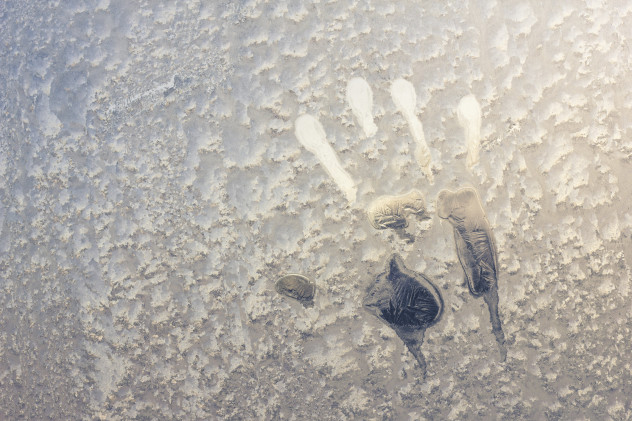

 Something strange is happening to residents of the Kalachi village in Kazakhstan. They just can’t seem to keep their eyes open. Every day, several villagers just fall asleep in broad daylight and remain asleep for at least a couple of hours. Some of them have reported only waking up after a couple of days. There is no apparent reason for these “sleep incidents,” and more than 100 residents have inexplicably fallen asleep when they weren’t tired over the course of a few years.In September 2014, several children who were attending school on the first day of the new academic year also fell asleep for no reason. Medical experts were unable to come up with a verified explanation, much less a “cure” or form of prevention. Naturally, some of those who suffer from this “condition” are terrified that they might die in their sleep.Some of the “sleepers” have reported strange feelings of memory loss, vertigo, and extreme nausea after waking from their sleep. Other symptoms even include hallucinations. In addition to all this, doctors have found that some of the people suffering from this ailment have suffered other health scares such as brain dysfunction and even strokes.The sleeping villagers are not good for the economy; not only are there hours of work lost, but fear is causing many people to leave the area. Radiation levels have been tested in the area but nothing abnormal has been found. Ongoing investigations have yet to turn up any clues as to why this strange affliction has befallen the little village. In 2015, scientists found high concentrations of carbon monoxide in the town. While the findings aren’t conclusive, they may provide one more clue in this mystery.
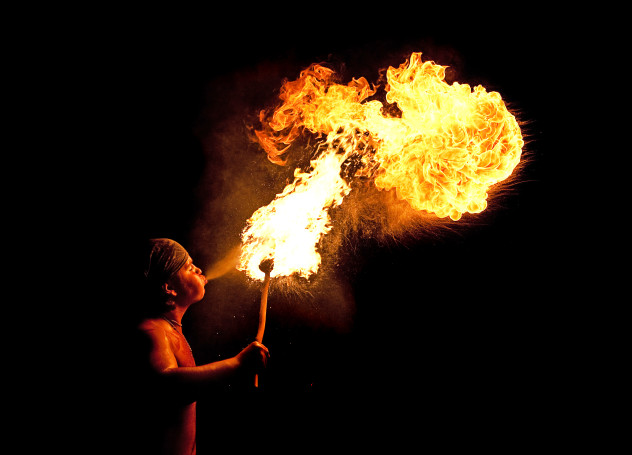 In the early 1800s, Jo Girardelli was the hot new fire act on the block. Taking on a whole new angle on fire acts, Girardelli was able to swallow red-hot objects without it causing her any pain or harm. Those who saw her perform were amazed at what was happening before their eyes.Girardelli was able to “rinse” her mouth with nitric acid without it burning holes in her gums and cheeks. To prove that she really had the acid in her mouth and not some harmless fluid, she would spit it onto iron where it would immediately start eating through the metal. Girardelli also played around with boiling oil, filling her mouth with it and then spitting it out, causing a minor fire when it landed on wood.Jo Girardelli didn’t stop there. All of her acts had to be bigger and better, so she started using hot wax and molten lead. She heated metal objects, such as shovels, over open fires and then pressed them against her skin. She even pressed her tongue against some of them. In all of these acts, her flesh remained just as it was before—completely unburned.She remained a hot topic all over England, and no one was ever able to figure out just how she did what she did. Not even the skeptics were able to prove any trickery on her part. There is no record of Jo’s life after she moved from England, and her amazing acts remain as mysterious as ever.
 Something creepy is taking place in the woods in western Switzerland. A man dressed in a military uniform with a gas mask over his face seems to be “haunting” the place.For more than 10 years now, locals who live near these woods have reported seeing the man walk the same path every day. They have given him the name Le Loyon, and they are terrified of him. He doesn’t speak and, when he encounters someone, he simply stares at them, and then walks away in silence. A photographer who tried to take a picture of the mysterious man reported him to be almost 2 meters (6’6″) in height.Children are too scared to play in these woods anymore, even though the man doesn’t seem to be threatening in any way. At one point, people saw him carrying what looked like flowers while slowly walking down a pathway in the woods. According to the authorities in charge of the area, there is nothing that can be done to get the man to leave the woods since he is not trespassing and has done nothing wrong.At one point, his clothes were found abandoned in the woods with a note saying he was leaving because “The risk of a hunt for the Beast” was too great.It is unknown where the man lives, why he wears a gas mask, and why he doesn’t speak. Several theories speculate that he might be mentally disturbed or have a skin disease which would cause him to not want to be seen by others. But, until someone gets him to take off the mask, or at least speak out, the mystery man will remain a mystery.
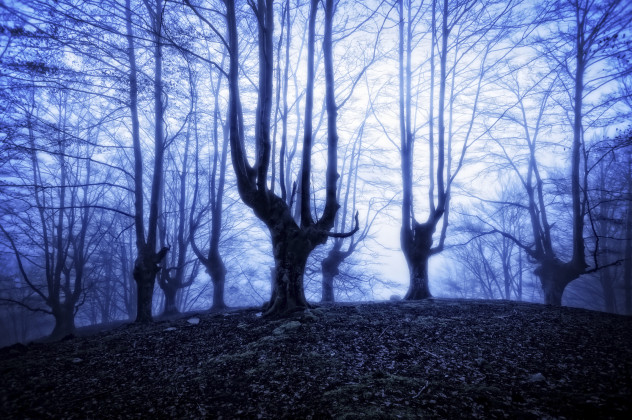 Believed by many to be the most haunted forest in the world, Hoia Baciu in Transylvania is the setting for many unexplained, spooky tales. It also doesn’t help that the trees are bent and twisted in seemingly unnatural ways, giving the woods a horror movie feel.Several visitors to the Hoia Baciu have returned from their trip terrified, claiming that burns and rashes have appeared on their bodies for no apparent reason. Some even claim to have skipped a few hours during their exploration among the creepy trees. They have no explanation for why they cannot remember what happened during the ”missing” hours.Many people are truly convinced that ghostly apparitions hang around in the forest, and the locals absolutely refuse to set foot in it. Especially since rumors of floating heads and voices emanating from the darkness started making the rounds.It all seems to have started back in 1968 when Alexandru Sift took a photograph inside the forest of what many continue to believe was a UFO. Another persistent story tells of a shepherd venturing into the woods with 200 sheep, never to be seen or heard from again.Ongoing ghost hunts have turned up no clue as to what might be behind all the weird events taking place here, but paranormal experts are not giving up the ghost just yet when it comes to studying Hoia Baciu and revealing its creepy secrets to the world.
 Since their discovery in 2007, cosmic radio bursts or “blitzars” have been a source of fascination to scientists around the world. The nine blitzars that have been studied in the years since their discovery have all been plucked from historical data.Then, in January 2015, scientists announced that they identified a blitzar in real time. This means that whatever event caused the radio burst to happen was happening at the time that the scientists caught it.It is unknown what causes these radio bursts, and experts have guessed that it might occur due to collapsing neutron stars or flares. The bursts have a length of one millisecond and, during this miniscule amount of time, they create the same amount of energy that the Sun would create over the course of one million years.Emily Petroff, a researcher in Australia, stated that these blitzars occur at a distance of more than five billion light-years away from Earth, and the real time blitzar was noticed near the Aquarius constellation. She went on to say that she and her team will continue looking out for blitzars so as to try and gather some information and, hopefully, one day get behind the mystery of their origin.
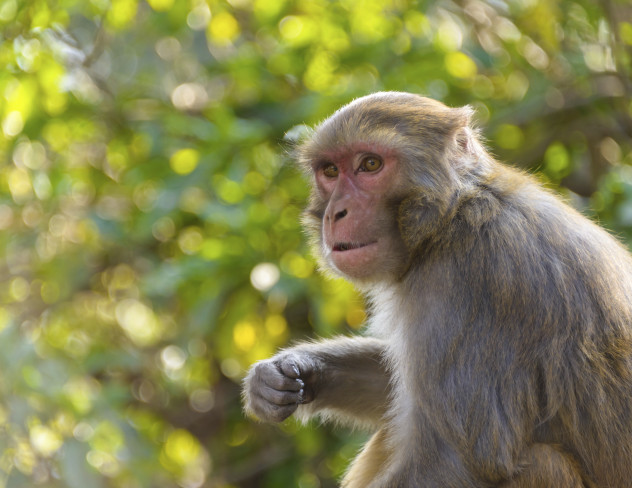 During World War II, Japanese soldiers stationed in Singapore glimpsed a strange version of Bigfoot there. Many reported seeing a primate-like creature covered in gray hair and standing up to 2 meters (6’6″) tall in the Bukit Timah rain forest.Sightings peaked during the war, but there are also a few present-day sightings reported every now and then. The Bukit Timah area is now a biodiverse nature reserve that housed several creatures, including tigers, not too long ago.Although it is still a mystery as to what the soldiers and others were actually seeing in this area, some people believe they might have confused macaques for primates. However, according to most experts, this would be unlikely as the macaques in Singapore resemble the ones in Japan and the soldiers at least would know what they were looking at. The last sightings took place in 2007 when visitors told stories of seeing an ape-creature being run over by a taxi and another scratching around in trash cans.
I hate the concept of guilty pleasures because it often does an injustice to the pleasure. But if I am ever feeling stuck, bored, under-stimulated, over-stimulated or tired and on the road, I know there is one book genre that will get me out of my funk—narrative non-fiction.
Sure, these books are for entertainment purposes first, just like Mad Men or Breaking Bad. They blow my mind for that reason. How do the authors do it? To tell this epic story and make even the background details seem exciting? To keep you on the edge of your seat even when, most of the time, you already know the ending? They can tell you the way the sunset looked on a day they never witnessed, they can tell you what the hero was thinking—deeply and intimately so.
All of this is more than journalism, more than facts—it is storytelling. That’s what narrative non-fiction is at it’s finest: storytelling about real people doing extraordinary things. It’s the arc, the rising and falling action, climax, the characters…and shockingly, it’s all true.
Below, I’d like to recommend what I think are just a few of the classics of the genre. These are books I loved so much that I read them in marathon sittings, wanting to get to the end but hoping they never finished. These authors are masters of their craft who can teach us not just about writing, but at their best, give us insights about life and the human condition. Enjoy!
1. In the Heart of the Sea: The Tragedy of the Whaleship Essex by Nathaniel Philbrick

Did you know that Moby Dick was based on a true story? And that the real story is arguably better? There was a real whaling ship that was broken in half by an angry sperm whale. And then it gets crazy. The members of the crew escaped in three lifeboats, traveling thousands of miles at sea with little food and water until they slowly resorted cannibalism (like drawing straws, killing and then eating the loser, cannibalism). Besides being an utterly unbelievable story, this book also gives a great history into the whaling industry and the cowboy-like entrepreneurs who led it. Wow.
2. Barbarians at the Gate: The Fall of RJR Nabisco by Bryan Burrough & John Helyar

Honestly, a leveraged buyout of RJR Nabisco (yes, the cracker company and the tobacco brands were once one company) by a couple of investment bankers in 1988 should be a really boring book. But somehow it isn’t. It not only isn’t, it’s basically a microcosm of the entire finance industry in the 80s. There are so many characters, so many twists and turns, so much detail. Look, I just went through the Dov Charney/American Apparel saga from the inside and as crazy as that I still on many occasions found myself saying, “Meh, still not as good as Barbarian.” Also the writer of this book, Bryan Burroughs, is just a plain master of this genre. His other two books are 100% worth reading and just as good as this one: The Big Rich and Public Enemies deserve to be on this list.
3. The River of Doubt: Theodore Roosevelt’s Darkest Journey by Candace Millard

I thought I knew about Theodore Roosevelt. This book opens with him stranded in the Amazon jungle begging his son to let him kill himself so he wouldn’t be a burden on their exploring party any longer. And then it gets better from there. I mean, did you know he is credited with being the first to chart and navigate a totally unknown river as long as the Nile? And that he did that after he was President, just for fun? I’m not sure I need to explain much else, but if you needed more convincing, I will say that Candice Millard who wrote Destiny of the Republic (which I highly recommend) wrote this too and it’s better than her last book. Not only is there a bunch of great history and drama here, it shows a human side of Roosevelt I had not understood before.
4. And the Sea Will Tell by Vincent Bugliosi and Bruce Henderson

It’s hard for me to say which Vincent Bugliosi book is best, but I am partial to the And the Sea Will Tell because it’s different than his others. Bugliosi was famously the prosecutor of Charles Manson and wrote a great book about it in Helter Skelter. In this book, he’s the defense attorney for Jennifer Jenkins (not her real name), a woman tried for the murder of married strangers committed by her boyfriend on a small island in the middle of the Pacific Ocean. They were caught when they pulled into a Hawaiian yacht club with the dead couples boat…painted in a different color. Some six years later, the wife’s body was found in a chest which washed up in a heavy storm. WTF right? Was she in on it? Did her weird boyfriend do it alone? What possible motivate did they have? Bugliosi empathizes with his client but she remains a mystery to him and to us. Most people think she was complicit in the murders but not Bugliosi, who tells the story not only of what happened on this lonely island but the riveting trial and ultimate acquittal.
5. A Nervous Splendor: Vienna 1888-1889 by Frederic Morton

One of my favorite books ever is a book called A Nervous Splendor, which looked at the insane intersection of Crown Prince Rudolf, a young Sigmund Freud, Gustav Mahler, Theodor Herzl, Gustav Klimt, and the playwright Arthur Schnitzler in Austria in 1888. The book begins and ends with Rudolf, a melancholy, difficult young man whose suicide, one could argue, put in motion the events of WWI. You wouldn’t think that such an intersection and coincidences could have gone unknown for so long, but they have. And that’s why you have to read books like these—because they show you a side of history that has been ignored or lost.
6. In Cold Blood by Truman Capote

Truman Capote, childhood friend of Harper Lee, writes one of the greatest true crime books of all time. It’s the gruesome 1959 murder of an entire family by two ex-cons who served time together. Why did they commit this murder? Who were these men? Why the unspeakable violence? These are the questions that fascinated Capote who spent hours interviewing the murderers at great length. He doesn’t so much answer all of the questions as he does give us a glimpse into an utterly foreign world. As Perry Smith told him in one interview: “I didn’t want to harm the man. I thought he was a very nice gentleman. Soft spoken. I thought so right up to the moment I cut his throat.” Jesus Christ. This book is a classic and perhaps the first in its genre for a reason.
7. The Tiger: A True Story of Vengeance and Survival by John Vaillant

Holy shit, this book is good. That’s why I have recommended it so many different times by now. Even if it was just the main narrative–the chase to kill a man-eating Tiger in Siberia in post-communist Russia–it would be worth reading, but it is so much more than that. The author explains the Russian psyche, the psyche of man vs. predator, the psyches of primitive peoples and animals, in such a masterful way that you’re shocked to find 1) that he knows this, and 2) that he fit it all into this readable and relatively short book. You may have heard about the story on the internet a while back: a tiger starts killing people in Russia and a team is sent to kill it (Russia is so unreal, they already have a team for this). At one point, the tiger is cornered and leaps to attack the team leader…and in mid-air the soldier’s rifle goes into the tigers open jaws and down his throat all the way to the stock, killing the tiger at the last possible second. The autopsy later revealed that the tiger had been shot something like a dozen times during its life and lived. And on top of that Vaillant also wrote an amazing book called The Golden Spruce, about one of the most unique trees to ever grow on this planet—until it was chopped down by an eco-terrorist with mental problems…and then mysteriously disappeared and was never seen again.
8. The New New Thing: A Silicon Valley Story by Michael Lewis

This book has got an entrepreneur who builds three billion dollar companies during the course of the book (Silicon Graphics, Netscape and WebMD). It’s got an epic quest to build the world’s largest sailboat. It has a “Rosebud”-esque tuba that makes multiple appearances. Jim Clark is the vehicle through which you come to understand Silicon Valley, entrepreneurship and in some ways, the new American Dream. Michael Lewis knows how to tell a story, yes, but mostly he knows how to find stories and his best books—The New New Thing being one of them tell stories through characters that are almost too good to be true. I would put his newer books The Big Short and Flash Boys up there with this book but they are less narratives and more explanatory. This book is all story and goddamn it’s a good one. (Also, I read this book because while I was poor, I tricked a friend from college into buying it “for us to share.” I still own the copy, he has not read it. Sorry Milt!).
9. Rising Tide: The Great Mississippi Flood of 1927 and How it Changed America by John M. Barry

This book is amazing and its subject matter isn’t constrained to just the South or the flood of 1927. It opens with the rich citizens of New Orleans hurrying to the levee to survey a growing emergency and ends with a decision that influenced the direction of America in innumerable ways—from its next President to the permanent decline of the South’s most important city to race relations for the next fifty years. It’s one of those books that is so meticulously researched and so masterly written that it is at once a book guaranteed to be a success (it was) and so much more educational than a book of its popularity would suggest.
10. Endurance: Shackleton’s Incredible Voyage by Alfred Lansing

50 plus years old, this is a story that more than stands the test of time. Sir Ernest Shackleton makes his daring attempt to cross Antarctic continent but his crew and boat are trapped in the ice flows. What follows are 600 days of harrowing survival, first from the elements, then from hunger, then from the sea as he makes a daring attempt in a small lifeboat to reach land 650 miles away, then again as he struggles over land and mountains to bring relief to his men. And when he finally arrives with it, Shackleton simply boards them on the boat and returns home as if nothing had happened. He was an immensely brave man in the midst of terrible adversity and we see this so clearly in a book based on the remarkable diaries of his men. He never quit, never seemed to despair. This book (and his life) were living proof of his family motto: “Fortitudine vincimus” (By endurance we conquer).
But of course, these books are history at its most interesting. It’s not always history you’d think that you’d care about but trust me, pick up one of these book and see what happens. And course, feel free to add your own recommendations below.

These will DEFINITELY give you the feels. (Kleenex, anyone?)
Whether you are looking for that special someone or blissfully in love, these ageless classics know just how to pull on those heartstrings. So, jump under the covers, turn down the lights and tuck into the most sought-after romantic novels of all time.
1. Wuthering Heights: A total eclipse of the heart

In one of the oldest heart-wrenching classics in the "lost love can turn a good man evil" scenario, Emily Brontë’s novel takes us back to 1802 at the Wuthering Heights estate. In this timeless love story, our leading man Heathcliff grows to become best friends with his adopted sister, Catherine, his life-long crush. But an offhand comment, overheard at the Heights, changes the course of both of their lives.
Romantic quote: “My love for Linton is like the foliage in the woods: time will change it, I'm well aware, as winter changes the trees. My love for Heathcliff resembles the eternal rocks beneath: a source of little visible delight, but necessary. Nelly, I am Healthcliff! He's always, always in my mind: not as a pleasure, any more than I am always a pleasure to myself, but as my own being.”
Fun Fact: The 1983 Bonnie Tyler power ballad "Total Eclipse of the Heart" was inspired by Wuthering Heights.
2. Anna Karenina: Love can be a train wreck

Frequently a top author’s choice, this Leo Tolstoy novel is a literary soap opera. Set in the highest circles of Russian society, Anna Karenina visits her brother Stiva in Moscow to help him save his marriage. While there, she falls in love with Count Vronsky. A married woman, Karenina fights off her desires until they overwhelm her and she leaves her husband, Alexei. Denied a divorce, Anna spends her life looking for acceptance in her relationship. When the strain of their love life becomes too much, Anna leaves Vronsky in a rage and well, if you haven’t read it, do! We won’t give away a heart-wrenching ending.
Romantic quote: “I've always loved you, and when you love someone, you love the whole person, just as he or she is, and not as you would like them to be.”
Fun Fact: Anna Karenina became a best-seller all over again in 2004 after Oprah put it on her list.
3. Romeo and Juliet: Wherefore art thou, Romeo?

In one of William Shakespeare's most celebrated works, this tale of "star-crossed lovers" has been told and interpreted time and time again (from film classic West Side Story to teen flick Romeo + Juliet). A story all lovers can relate to, Romeo and Juliet focuses on the tragedies that accompany the loss of true love. Lovers Romeo Montague and Juliet Capulet, two of the most famed clans in literature, come from opposite sides of the Verona tracks and their family's disapproval of their love eventually leads to their demise.
Romantic quote: “Did my heart love till now? forswear it, sight! For I ne'er saw true beauty till this night.”
Fun Fact: In the popular computer game The Sims 2, there is a neighborhood called Veronaville in which two characters named Romeo Monty and Juliette Capp fall in love.
4. Casablanca: Play it again, Sam

Made famous by Humphrey Bogart and Ingrid Bergman, this love story was originally a play by Murray Burnett. The play was turned into a script by writers (and brothers) Julius and Philip Epstein and their friend Howard Koch. In the story, American Rick Blaine is the owner of a gambling club "Rick's Cafe Americain" in the Moroccan city of Casablanca. Set during World War II, Rick is a bitter man having been scorned by ex-lover Ilsa Lund. When she walks back into his life suddenly, now married, with her husband in tow, Rick is forced to come face-to-face with well-aged heartache.
Romantic quote: “Kiss me. Kiss me as if it were the last time.”
Fun Fact: In a 2005 poll by the American Film Institute, the Casablanca line "Here's looking at you, kid" was ranked the fifth most memorable line in cinema history. (Six other lines from the film are also in the top 100.)
5. Midsummer Night's Dream: Dream a little dream

A romantic comedy by William Shakespeare, this play takes place in Athens as Duke Theseus plans a large festival around his marriage. During this time, Theseus' daughter, Hermia, is refusing to marry her fiancé. Due to a true-love-in-the-wings named Lysander. Against her father's wishes, she flees the nuptials for the woods. And guess who? While there, they befriend fairies who cause a bit of mischief. Cue a new love triangle and surprise ending!
Romantic quote: “I’ll follow thee and make a heaven of hell, To die upon the hand I love so well.”
Fun Fact: In the 1989 blockbuster film Dead Poets' Society, the character Neil Perry (played by Robert Sean Leonard), was cast as Puck in the a local production of A Midsummer Night's Dream.
6. Doctor Zhivago: Boy meets girl meets girl

This Noble Prize-winning Russian novel by Boris Pasternak is the ageless classic of one man torn between two women. Yuri Zhivago is a medical doctor and poet during the 1917 Russian Revolution. While married to aristocratic Tonya, he falls in love with nurse Lara. Set during a war time, Zhivago's love triangle falls prey to a twist of fate, and becomes a tale of protagonist versus an achy, breaking heart.
Romantic quote: “You and I, it's as though we have been taught to kiss in heaven and sent down to earth together, to see if we know what we were taught.”
Fun Fact: Doctor Zhivago's first film version was a made-for-TV version produced in Brazil in 1959.
7. Sense and Sensibility: Sisters and soul mates

A Jane Austen classic from 1811, this love story focuses around the Dashwood sisters — Elinor and Marianne. When their father dies, they lose their family estate and are reduced to a life of poverty. The story follows the sisters as they move in with a distant relative, leading them to equal parts heartache and romance.
Romantic quote: “I cannot, I cannot,' cried Marianne; 'leave me, leave me, if I distress you; leave me, hate me, forget me! But do not torture me so. Oh! how easy for those who have no sorrow of their own to talk of exertion!”
Fun Fact: In Ang Lee's 1995 remake of Sense and Sensibility, there are six actors who went on to play parts in the Harry Potter films: Emma Thompson (Sybil Trelawney), Alan Rickman (Severus Snape), Gemma Jones (Madam Pomfrey), Robert Hardy (Cornelius Fudge), Elizabeth Spriggs (The Fat Lady) and Imelda Staunton (Dolores Umbridge).
8. Dangerous Liaisons: Sexy and sinful

The classic eighteenth-century novel by Pierre Choderlos de Laclos is the ultimate dark tale of lust, greed, deception and romance, featuring the Marquise de Merteuil, who requests that her partner, the Vicomte de Valmont, seduce the young daughter of her cousin. Meanwhile, young Cecile has the hots for her teacher, Chevalier Danceny. Love affairs, deception and lies aplenty unfold.
Romantic quote: "Now, I'm not going to deny that I was aware of your beauty. But the point is, this has nothing to do with your beauty. As I got to know you, I began to realise that beauty was the least of your qualities. I became fascinated by your goodness. I was drawn in by it."
Fun Fact: The 1999 cult movie hit Cruel Intentions was a modern adaptation of the novel Dangerous Liaisons.
9. Pride and Prejudice: A game of cat and mouse

Charles Bingley is new to town and has leased an estate with his sisters and close friend Fitzwilliam Darcy. Named a "catch" by all the single ladies in town (due to surprise . . . his looks and money), Darcy is also known as snob. Neighbor Elizabeth Bennet finds herself repulsed by Darcy’s ego. The resulting pas de deux between the feisty twosome makes for a quite a page-turner.
Romantic quote: “They walked on, without knowing in what direction. There was too much to be thought, and felt, and said, for attention to any other objects.”
Fun Fact: Helen Fielding’s book Bridget Jones's Diary was inspired by Pride and Prejudice.
10. Hugo's Hunchback of Notre Dame: Oh Quasimodo!

Victor Hugo’s story, set in Paris in 1482, centers around Norte Dame cathedral. In this "true love comes from within" story, Gypsy dancer Esmeralda is longed for by Quasimodo, Notre Dame's kind-hearted but deformed bellringer. Upon order of Archdeacon Frollo, Quasimodo attempts to kidnap Esmeralda, but is caught. Standing trial, Quasimodo is humiliated by the public and his victim Esmeralda has pity on him. Soon after Esmeralda is blackmailed and sentenced to death for the murder of her crush Phoebus. On her sentencing day, Esmeralda is saved from death by her dear Quasimodo. But can true love overcome her distaste for his looks?
Romantic quote: “Love is like a tree: it grows by itself, roots itself deeply in our being and continues to flourish over a heart in ruin. The inexplicable fact is that the blinder it is, the more tenacious it is. It is never stronger than when it is completely unreasonable.”
Fun Fact: Hunchback of Notre Dame has been adpated to the screen numerous times and cast two famous Anthonys in the leading Quasimodo role Anthony Quinn in 1956 and Anthony Hopkins in 1982.
History (and sometimes, unfortunately, current events) shows us just how easily national borders can change, but we still like to think that they are permanent fixtures. These photos of different national borders around the world show you how both friendly and hostile nations like to fence off their turf.
Borders will often say much about countries' relationships. The borders between friendly nations, especially those in the European Union's Schengen zone, can seem almost non-existent, marked by no more than a line or a road sign. Other borders are delineated by natural markers like rivers, or by man-made markers, like guard posts and demilitarized zones.










Borders will often say much about countries' relationships. The borders between friendly nations, especially those in the European Union's Schengen zone, can seem almost non-existent, marked by no more than a line or a road sign. Other borders are delineated by natural markers like rivers, or by man-made markers, like guard posts and demilitarized zones.
#1 Residents Of Naco, Arizona And Naco, Mexico Play Volleyball Match Over Fence Between USA And Mexico
#2 Slovakia, Austria And Hungary
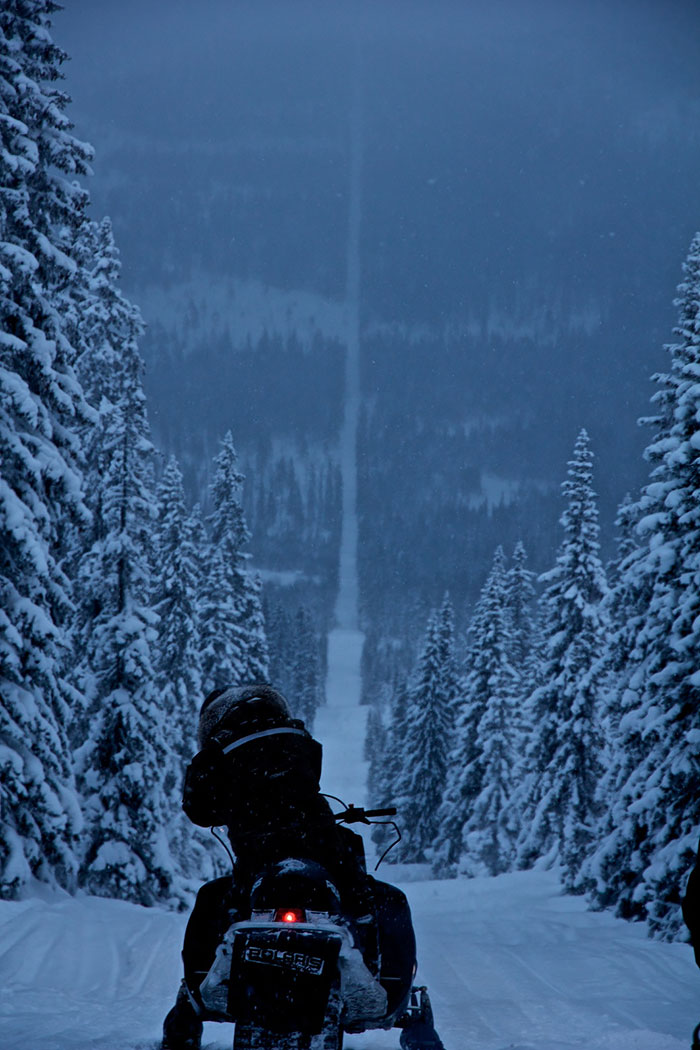
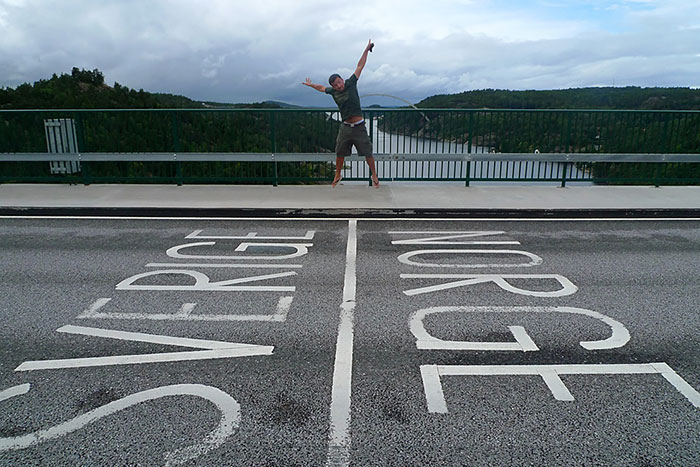
#3 Norway And Sweden
#4 Netherlands And Belgium
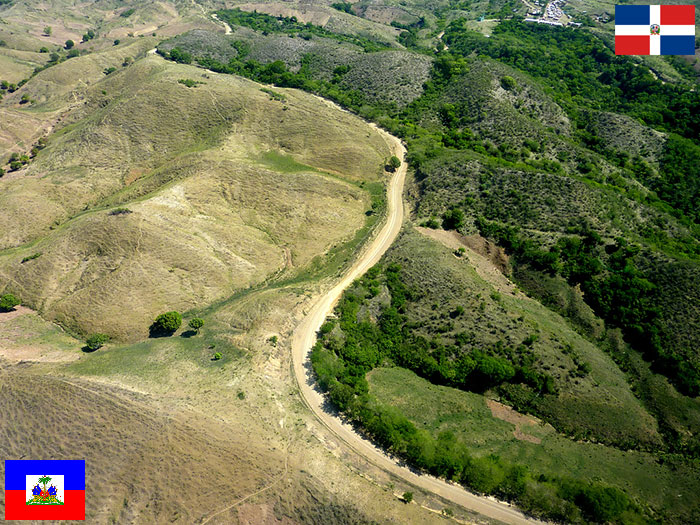
#5 Haiti And The Dominican Republic, Distinguished By Their Radically Different Environmental Protection Laws
#6 Australia And Everywhere
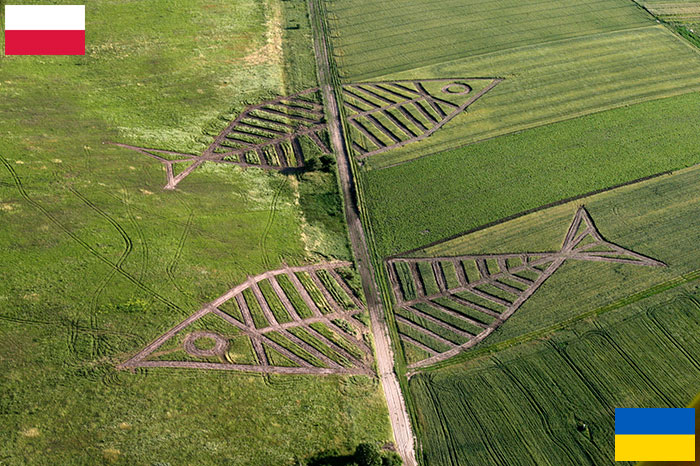
#7 Poland And Ukraine
#8 Zipline Connects Spain And Portugal
#9 USA And Mexico
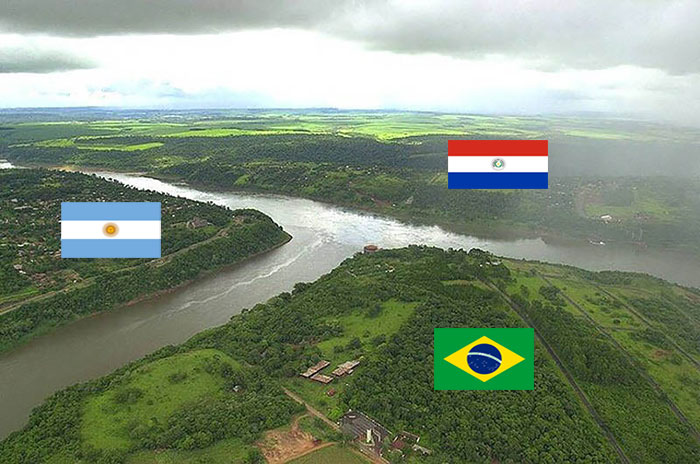
#10 Argentina, Brazil And Paraguay
#11 Macau Drives On The Left Side Of The Road, Mainland China Drives On The Right, So This Is What They Do At The Border
#12 Bolivia And Brasil
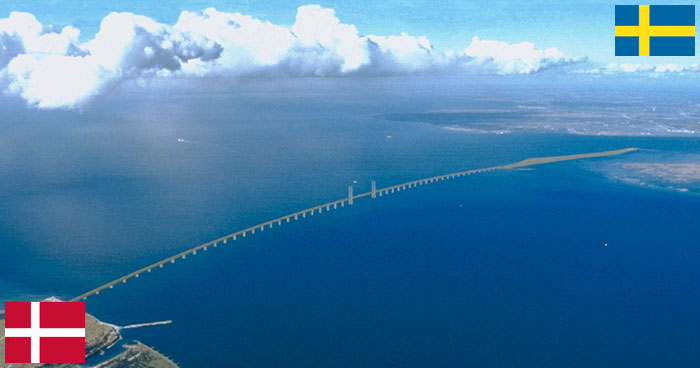
#14 Denmark And Sweden
#15 Sweden And Norway
#16 Point Where Borders Of Germany, The Netherlands And Belgium Converge Near City Of Aachen
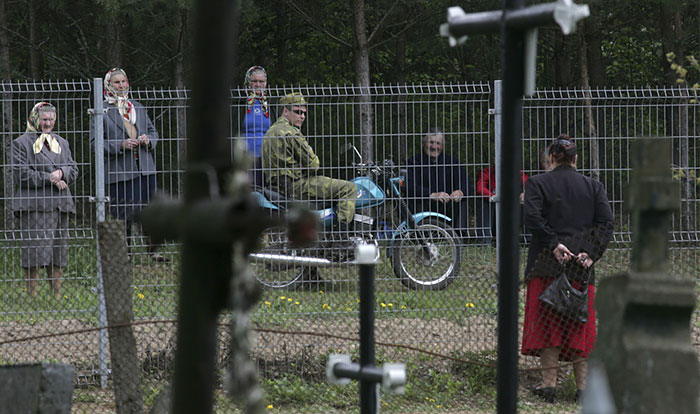
#17 The Woman At Right Is Standing In The Lithuanian Village Of Norviliskes To Speak With Her Belarusian Relatives Across The Fence On The Border Between Belarus And Lithuania
#18 Usa And Canada
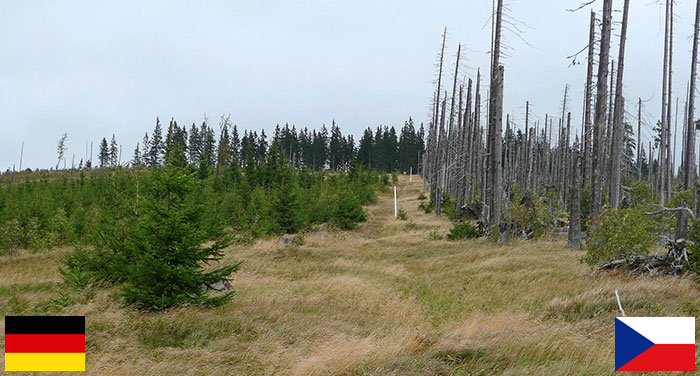
#19 Germany And Czech Republic Showcase Two Different Approaches To Bark Beetle Infestation - Silvicultural Intervention Vs. Intentional Neglect
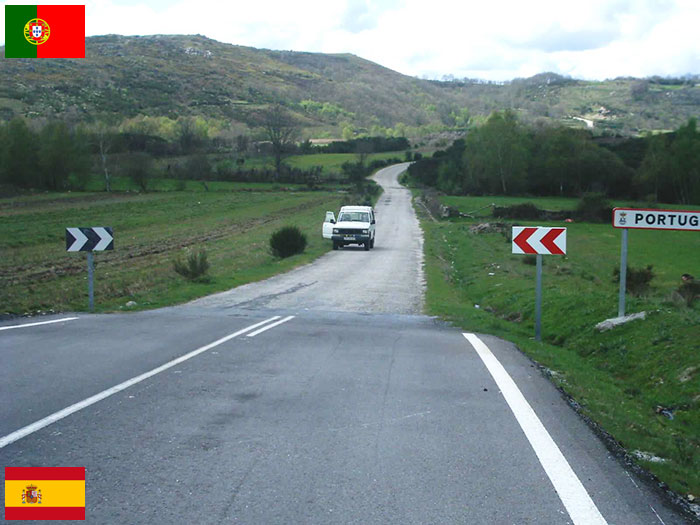
#20 Spain And Portugal
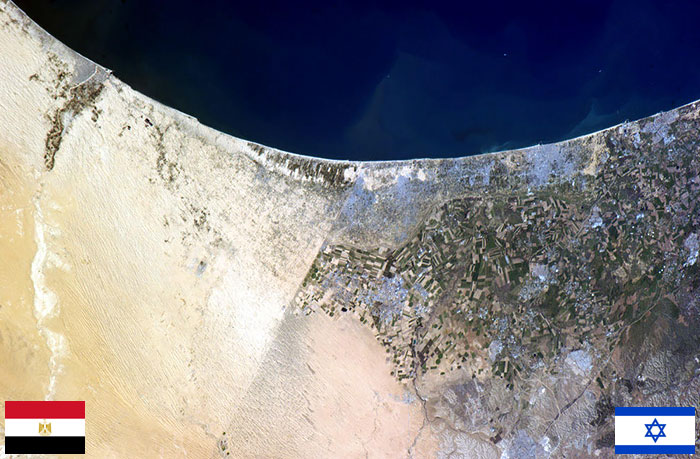
#21 Egypt And Israel
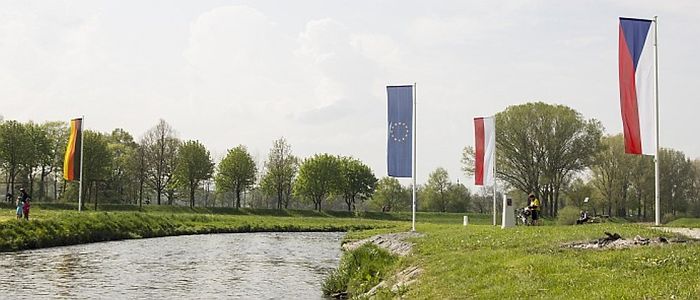
#22 German And Poland And Czech